


Cerakote Weapon Light Guide: Why FDE Is Taking Over Tactical Gear
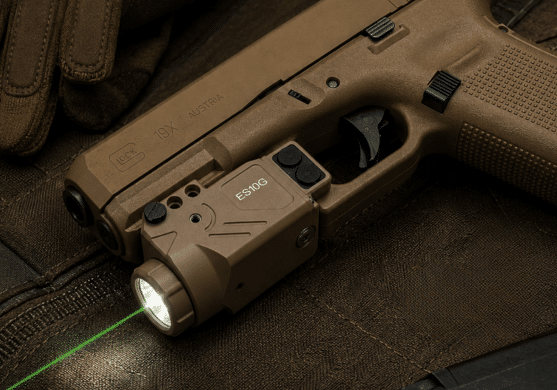
Walk through any gun show floor, scroll any tactical forum, or spend ten minutes at the NRA Annual Meeting, and you’ll notice that finish talk has completely taken over. Cerakote weapon lights. FDE everything. Anodized. PVD. Mil-spec. OD Green. Everyone has an opinion on what looks good. Almost nobody explains what’s actually happening at the surface level, and why it matters far beyond aesthetics.
This is that explanation. And along the way, we’re announcing the first wave of the HiLight Tactical Cerakote lineup (the Enforcer 2 and Peak Performance, now available in colorways that weren’t possible before) with a much larger wave on the way.
At a glance
- The Surface Covenant
- Cerakote vs Anodized
- PVD Explained
- Why FDE is Everywhere
- Cerakote Maintenance
- The Launch
The Surface Covenant: Why a Finish Is a Performance Decision
The Surface Covenant
Every Finish Is a Promise
Every finish on a piece of tactical gear (whether it’s a Cerakote weapon light, an anodized optic, or a PVD-coated knife) represents an implicit agreement between the manufacturer and the person carrying it. A promise about how that tool will age, survive use, handle sweat and holster friction, and hold up across temperature extremes. Most buyers never ask whether that covenant is actually being honored.
A finish that looks incredible out of the box but scratches at the first holster draw? That’s a broken promise. A matte Cerakote coat that absorbs impact, stays consistent from a Florida summer to a Minnesota winter, and looks the same after 5,000 draws as it did on day one? That’s a manufacturer who understood what their product is actually for.
When HiLight Tactical committed to Cerakote for the Enforcer 2 and Peak Performance weapon lights, this was the conversation. Not “what color looks cool,” but “what finish actually keeps its promise to the person running this gear in real conditions.” The answer was unambiguous.
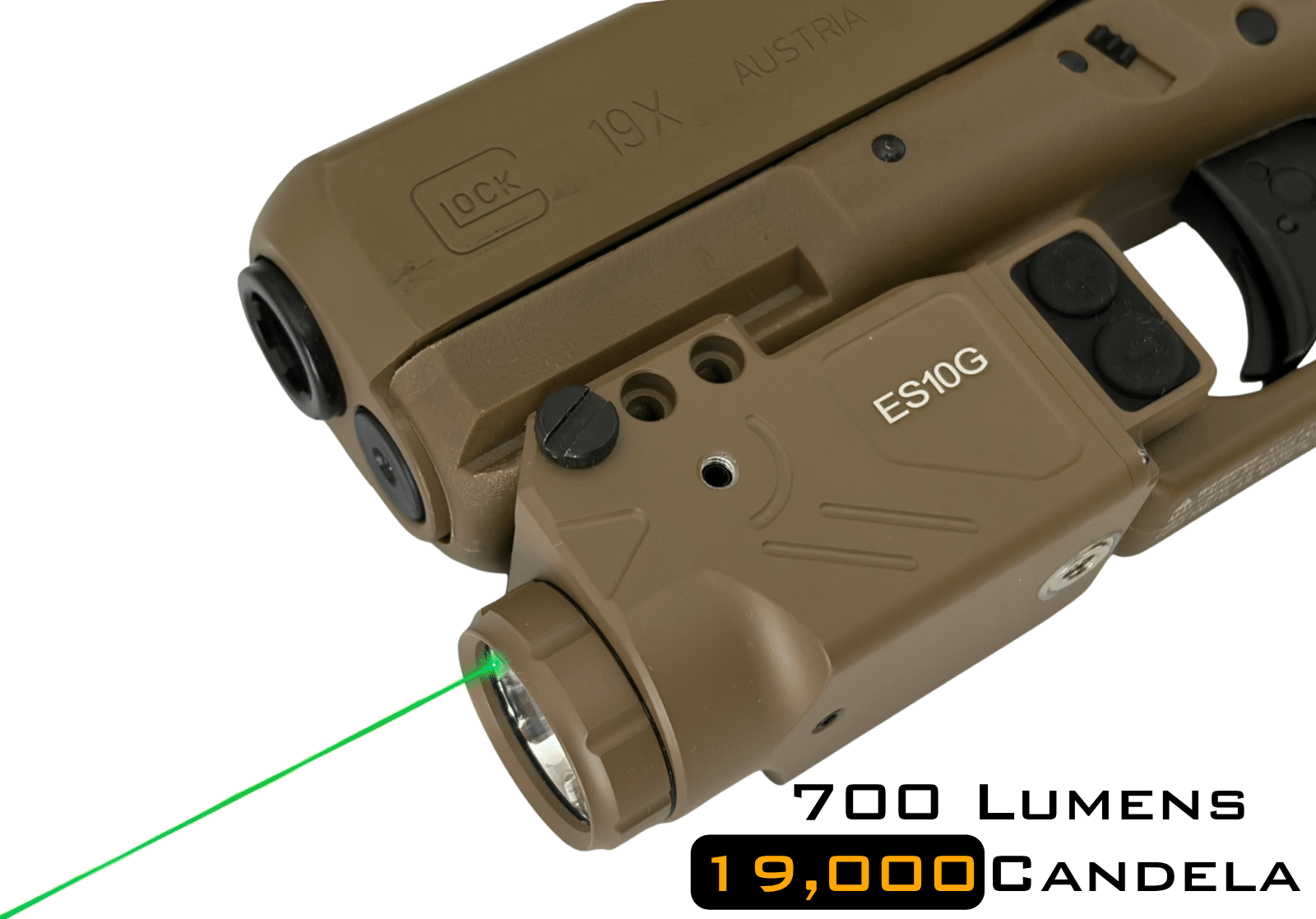
Enforcer 2 – Cerakote FDE Finish
Cerakote vs Anodized vs PVD:
What’s Actually Happening to the Metal
Most buyers treat these as interchangeable: just different ways to add color and protection to metal. They’re not. Each is a fundamentally different process, and the differences matter enormously when you’re choosing a Cerakote weapon light over an anodized one, or understanding why PVD, despite being incredibly hard, isn’t the right call for duty tactical gear.
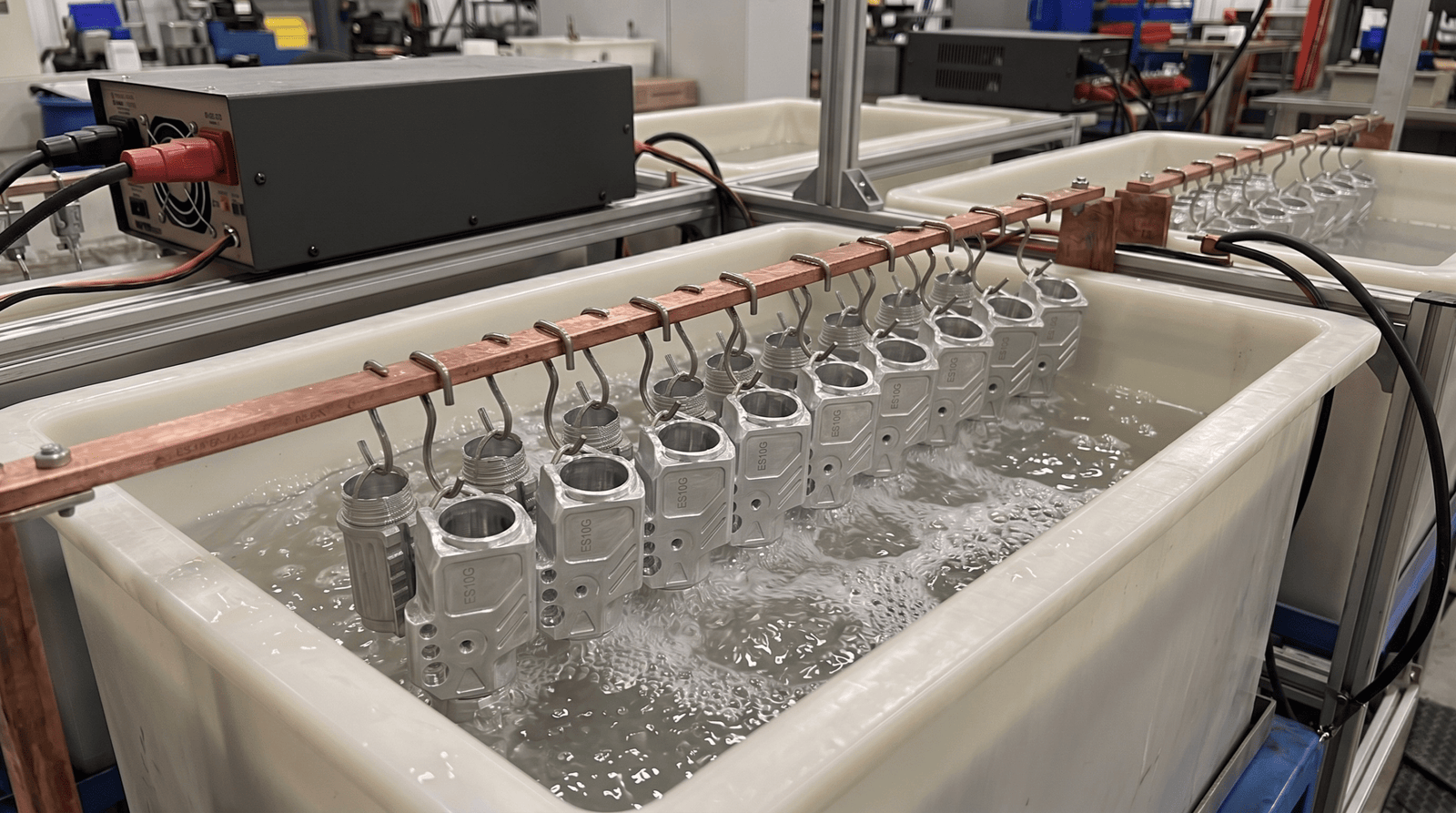
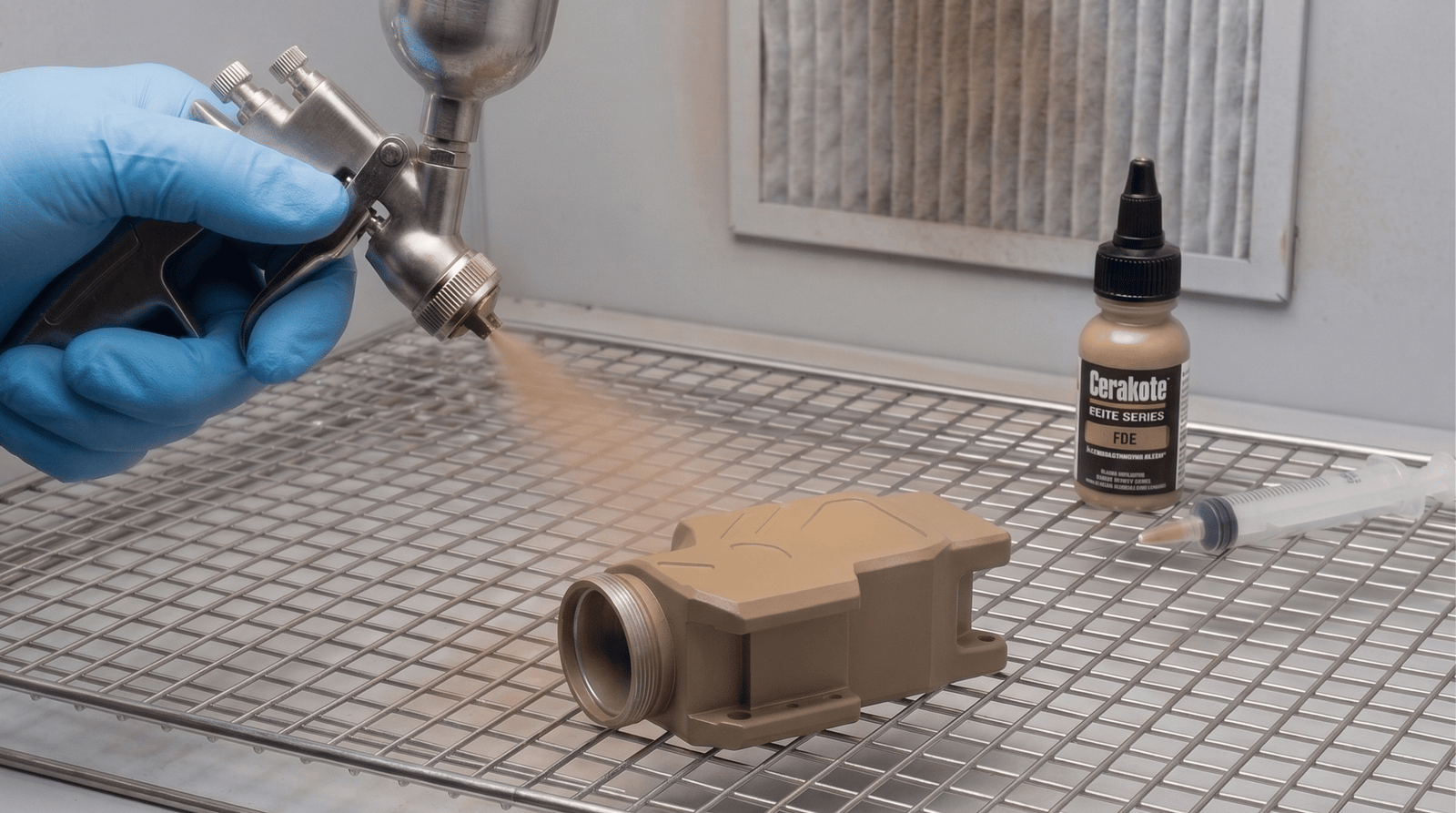
Left: Anodizing process · Right: Cerakote spray application
Anodizing: The Finish That Grows from Within
Anodizing is an electrochemical process. The aluminum part is submerged in an acid bath, a current is run through it, and the surface oxidizes in a controlled way, creating a layer of aluminum oxide that’s integral to the part itself. The finish isn’t applied on top. It grows from within. This is why Type III hard anodizing reaches up to 70 Rockwell C hardness, is dimensionally stable, and resists corrosion extremely well.
The trade-offs are significant. Anodizing only works on aluminum, which means a weapon light with a polymer body, steel hardware, and aluminum housing gets an inconsistent finish. It comes in a limited color range because you’re dyeing a porous oxide layer before sealing it. And critically: if an anodized finish chips or wears through, there’s no repairing it in the field. The part goes back into a controlled acid bath.
Cerakote: Ceramic Armor at the Surface Level
Cerakote is a polymer-ceramic composite coating. Applied as a liquid (sprayed onto the part, then oven-cured at around 250°F), the ceramic particles lock into a rigid, ultra-thin film (roughly 0.001 inches thick) that bonds tightly without meaningfully changing the dimensions of the part. The result is exceptional hardness, corrosion resistance, chemical resistance, and the ability to hold virtually any color or finish with precision.
Anodizing transforms the surface. The metal becomes its own protection. Cerakote armors the surface. A ceramic-polymer shell locks onto the exterior, across aluminum, polymer, and steel simultaneously. On a multi-material weapon light, that uniform coverage is something anodizing simply cannot deliver.
For a Cerakote weapon light that moves through holsters in all conditions, combines multiple materials, and needs to be available in earth tones, bright tactical colors, or anything in between: Cerakote is the correct engineering decision.
PVD: The Third Finish Option (and Why It Has a Tactical Problem)
Since we’re being thorough: Physical Vapor Deposition, or PVD, is a finishing process worth understanding, especially if you’ve seen “PVD coated” on a knife or firearm and wondered what it actually means and how it stacks up against Cerakote.
PVD is a vacuum process. The substrate goes into a chamber, target materials like titanium nitride or chromium are vaporized at extreme temperatures, and those atoms deposit onto the part in a microscopically thin, incredibly dense layer. The result is a finish that’s often harder than either anodizing or Cerakote, with a metallic sheen that looks more like a polished or satin metal than a coated surface. It’s what gives “black chrome” or “gold titanium” finishes on custom knives and pistols that deep, reflective quality other processes can’t replicate.
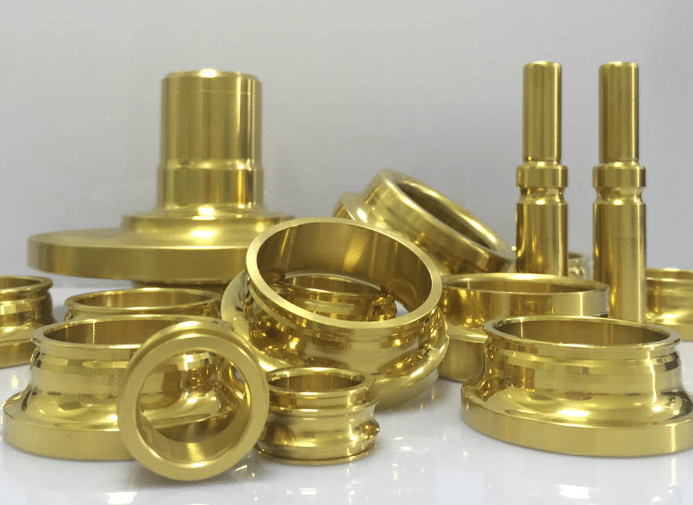
PVD coating – metallic sheen finished PVD hardware
The Paradox of Shine
When Looking Better Works Against You
The more visually impressive a metallic finish looks under showroom light, the more it works against you in real operational conditions. A glinting, reflective surface telegraphs your position in low-light environments. It catches ambient light at exactly the wrong moment. The matte finish that looks “less impressive” in a gun case is actively suppressing your light signature in the field. PVD wins on hardness. Cerakote wins on tactics.
PVD has a clear place: knives, EDC tools, watches, custom pistols: anything where premium aesthetics justify the cost and operational discretion isn’t the primary concern. But on a Cerakote weapon light you’re running in a dark parking structure at 2 a.m.? Matte ceramic coat wins, every time.
| Property | Cerakote | Anodizing | PVD |
|---|---|---|---|
| Hardness | High | Very High | Extremely High |
| Color Range | Virtually Unlimited | Limited (dye-based) | Limited (metallic tones) |
| Multi-Material | All substrates: aluminum, polymer, steel | Aluminum only | Metal only |
| Field Repair | Yes (certified applicator) | No | No |
| Finish Type | Matte, tactically correct | Matte / Semi-gloss | Metallic sheen (glint risk) |
| Light Signature | None | Low | Moderate to High |
| Best Application | Cerakote weapon lights, duty gear, multi-material platforms | Aluminum firearms, optic bodies | Knives, EDC, premium aesthetics |
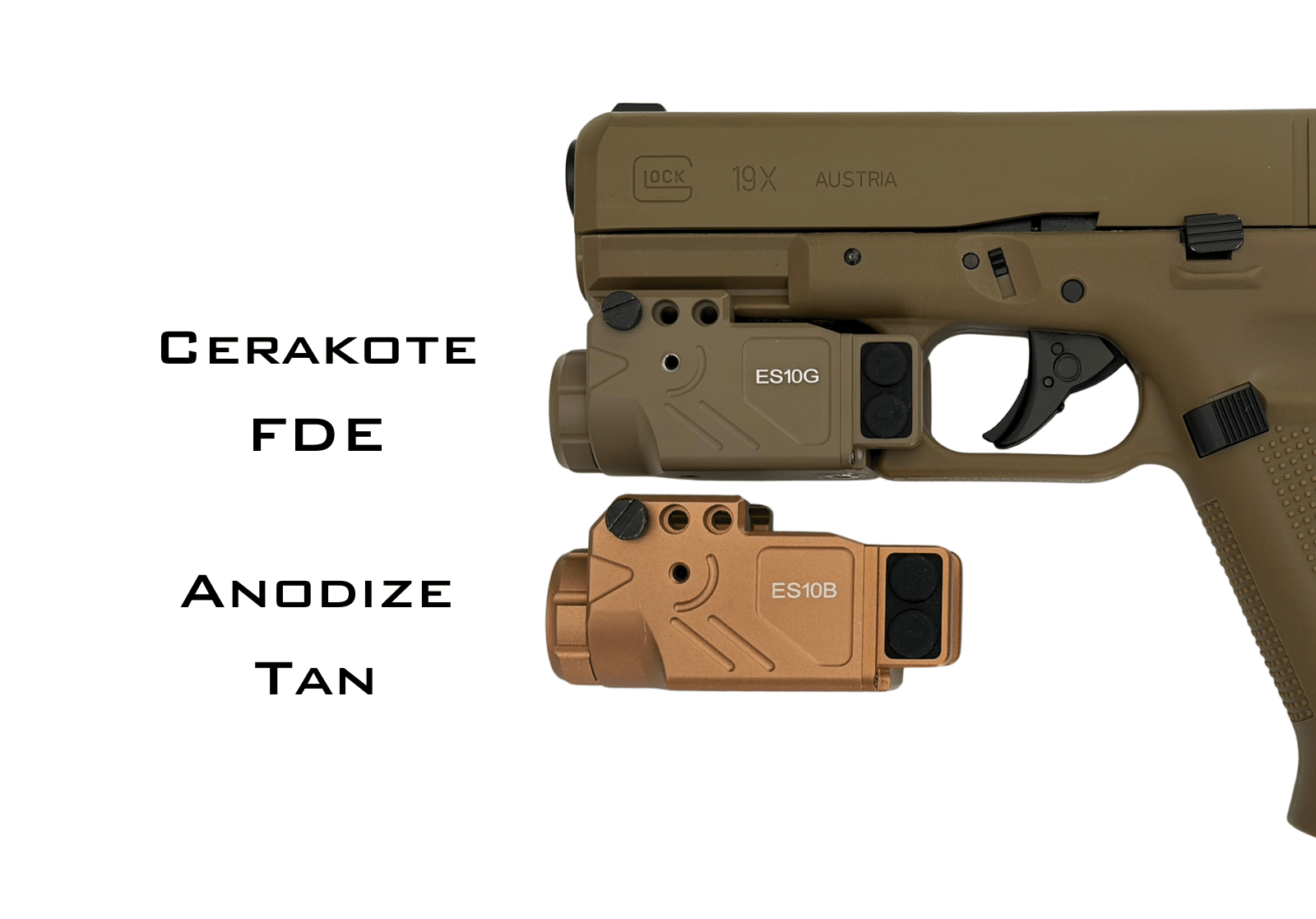
Finish comparison — Cerakote FDE vs Anodize Tan
Why FDE Is Everywhere in Tactical Gear Right Now
If you walked the floor at NRA Annual Meeting this year, you noticed it immediately: Flat Dark Earth has completely taken over. FDE handguns. FDE rifle stocks. Every major booth had something earth-toned, and the sea of tan stretched across the entire floor. So what’s driving the FDE surge? Is this just trend-chasing?
Partly. But there’s something more interesting and more tactical underneath it.
FDE’s rise tracks almost exactly with the growth of the modern sporting rifle market and the expanding conversation around home defense and concealed carry. When tactical gear was primarily LE and military, black was the default: professional, institutional, invisible in the system. As civilian carry culture matured, buyers started asking a different question: visible to whom, and in what environment?
Spectral Discipline
Managing How Your Gear Interacts with Light
Managing how your gear interacts with light in its operating environment. Matte FDE and OD Green earth tones absorb and scatter light rather than reflect it. In many real-world environments (neutral walls, natural terrain, vehicle interiors) black has higher contrast than earth tones do. FDE tactical gear wasn’t just built for desert terrain; it was built to reduce visual signature everywhere that isn’t pure darkness. That’s a broader tactical argument than most people realize.
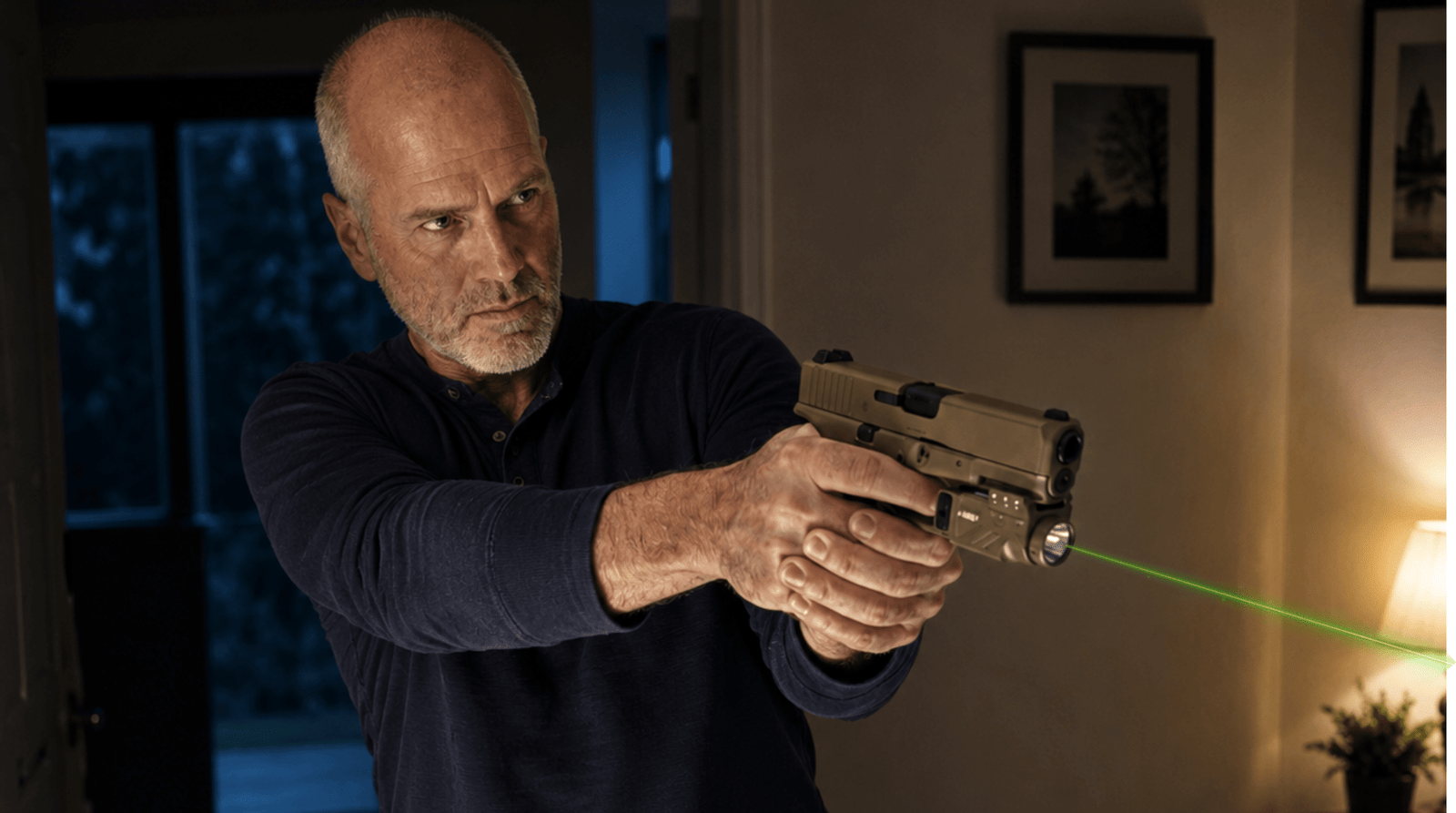
HiLight Tactical — FDE Cerakote weapon light, mounted configuration
There’s a cultural layer too. Earth tones communicate something specific. They signal real-world use over display-piece aesthetics. They say “this was thought about.” At NRA this year, the sea of FDE wasn’t just a color trend: it was the market expressing a collective preference for gear that looks like it means business. The Cerakote weapon light FDE surge is the finish argument and the cultural argument arriving at the same answer simultaneously.
OD Green is following the same trajectory, slightly cooler, slightly more muted, and with a legacy in military applications that gives it credibility across a wide range of tactical audiences. Both FDE and OD Green are coming in force to the HiLight Tactical lineup within the next 30 days.
New Colorway

The Cerakote Color Nobody’s Talking About Yet: Green/Cyan
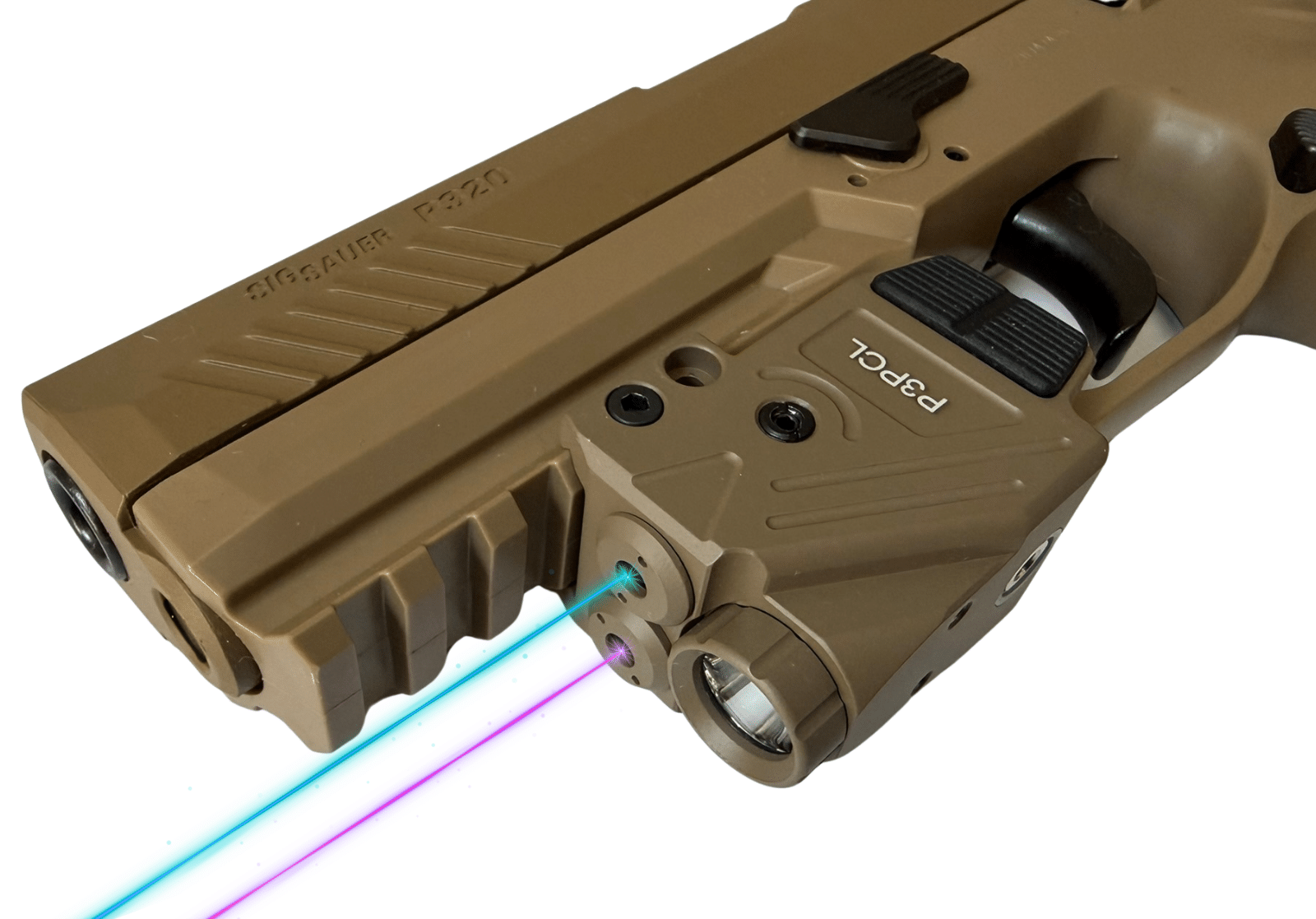
Purple/Cyan is a dual-laser color pairing that’s become recognizable across the weapon light category. It works, and has built a following. We still offer it, and it still sells for a reason.
But Green/Cyan is where we’re directing attention with this launch, and here’s the tactical logic behind it.
Green is the dominant daylight-visible laser color in civilian tactical applications. It’s what most users already run as their primary aiming laser. Cyan sits adjacent to it on the visible spectrum with a meaningfully different contrast profile in different lighting conditions (tighter in bright ambient light, distinct at close range). Together on a Cerakote weapon light, they offer a visual language that’s cohesive, technically grounded, and completely different from anything else in the current product landscape.
Purple/Cyan has drama. Green/Cyan has precision. Both are legitimate choices, and we just think there’s an underserved audience for the latter, and we built the first batch around the people ready to find it.
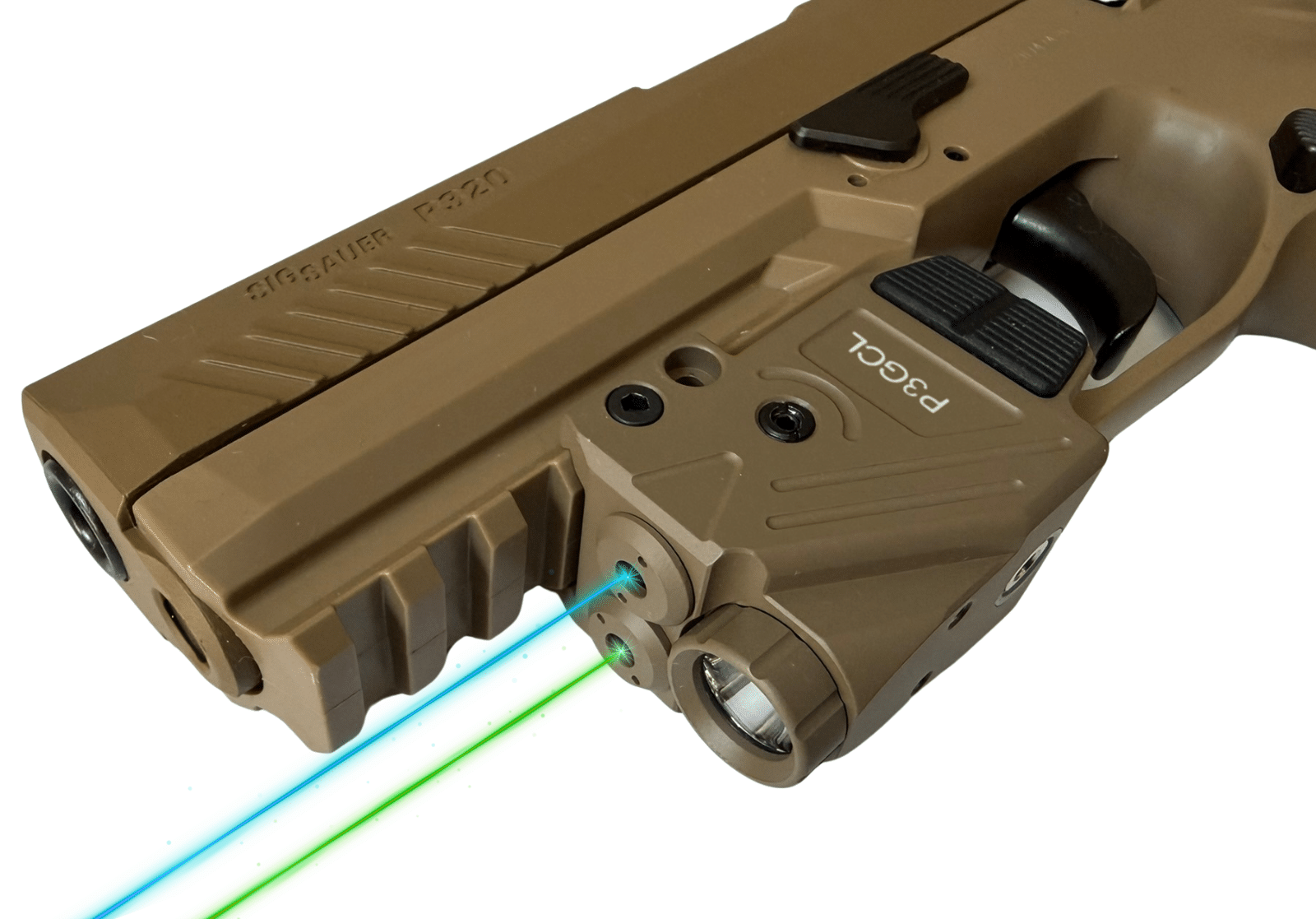
Left: Peak Performance Green/Cyan (new) · Right: Peak Performance Purple/Cyan
Enforcer 2
Cerakote – Green
In StockEnforcer 2
Cerakote – Cyan
In StockPeak Performance
Purple / Cyan
In StockPeak Performance
Green / Cyan
New Color
Care Guide
How to Maintain a Cerakote Finish on a Weapon Light
Cerakote is one of the most durable finishes available on tactical gear, but durability isn’t the same as invincibility. Here’s exactly what matters for keeping a Cerakote weapon light looking and performing correctly over the long term.
- 01Clean it like a tool, not like a finish. Standard gun cleaning solvents (Hoppe’s No. 9, CLP, most lubricants) are fully compatible with Cerakote. Brief acetone exposure is fine. What degrades a Cerakote finish over time is prolonged soaking in harsh solvents or abrasive scrubbing. For routine cleaning, a microfiber cloth dampened with CLP is all you need. For carbon buildup or heavy grime, a nylon brush works perfectly.
- 02Never use abrasive pads or steel wool. Scotch-Brite, steel wool, or any abrasive surface will cut through the ceramic-polymer layer unevenly. Once a spot is worn through, it’s worn through. If you’ve been using abrasives on bare metal in the past, this is the habit to retrain first.
- 03Holster fit matters more than most users realize. A loose Kydex holster creates friction at inconsistent and unpredictable angles, and that’s the fastest way to wear through any finish, Cerakote or otherwise. A properly fitted holster creates controlled, repeatable contact with specific points, exactly what Cerakote is engineered to handle over thousands of draw cycles.
- 04Cerakote can actually be touched up (unlike anodizing). This is one of the most underappreciated advantages of Cerakote over anodized finishes: a certified Cerakote applicator can recoat worn areas or refinish a piece entirely. The finish doesn’t have to be written off if something significant happens to it. Find a local applicator, and the original finish can be fully restored.
- 05For long-term storage, still oil the metal components. Cerakote provides excellent corrosion resistance, but it isn’t a substitute for proper storage practice on steel components in the assembly. A light coat of oil before extended storage remains good practice regardless of the finish present.
Product LaunchThe HiLight Tactical Cerakote Launch:
The HiLight Tactical Cerakote Launch:
What’s Available Now and What’s Coming
Available Now
Ships Immediately
Enforcer 2: Cerakote – Green
19,000 cd · 700 lm · Magnetic sealed charge
In Stock
Enforcer 2: Cerakote – Cyan
19,000 cd · 700 lm · Magnetic sealed charge
In Stock
Peak Performance: Purple / Cyan
9,000 cd · 700 lm · Dual-color laser
In Stock
Peak Performance: Green / Cyan
9,000 cd · 700 lm · New dual-laser colorway
New Color
Coming Soon: The Cerakote Explosion
Reakt Series: FDE
Full Cerakote FDE across every laser configuration
Coming Soon
Reakt Series: OD Green
Select models in Cerakote OD Green
Coming Soon
Enforcer 2: OD Green
Most-requested Cerakote colorway
Coming Soon
Coming soon: the complete Cerakote palette across the lineup, in the colorways the tactical community has been asking for.
A finish isn’t decoration. It’s the outermost layer of a performance decision, one that determines how your gear holds up in heat, darkness, holsters, and years of real use. Cerakote earns its place as the right finish for a Cerakote weapon light because it keeps that promise across the widest range of conditions, materials, and colors of any coating process available.
FDE is everywhere because the culture caught up with the physics. Spectral discipline, not aesthetics, is what drives serious gear choices. Green/Cyan is what’s next. And OD Green across the Reakt series is the earth-tone argument completed.
We’re just getting started.
— The HiLight Tactical Team · hilighttactical.com
Shop the Cerakote Launch
Cerakote Weapon Lights: Available Now
Weapon Light + Laser
Enforcer 2
Candela19,000 cd
Lumens700 lm
Cerakote ColorsGreen · Cyan
ChargeMagnetic Sealed
Weapon Light + Dual Laser
Peak Performance
Candela9,000 cd
Lumens700 lm
Cerakote ColorsPurple/Cyan · Green/Cyan
LaserDual-Color
Full Cerakote Lineup
Reakt Series
FDE CerakoteAll laser configs
OD GreenSelect models
Availability~30 days
LaunchFull series · Day 1